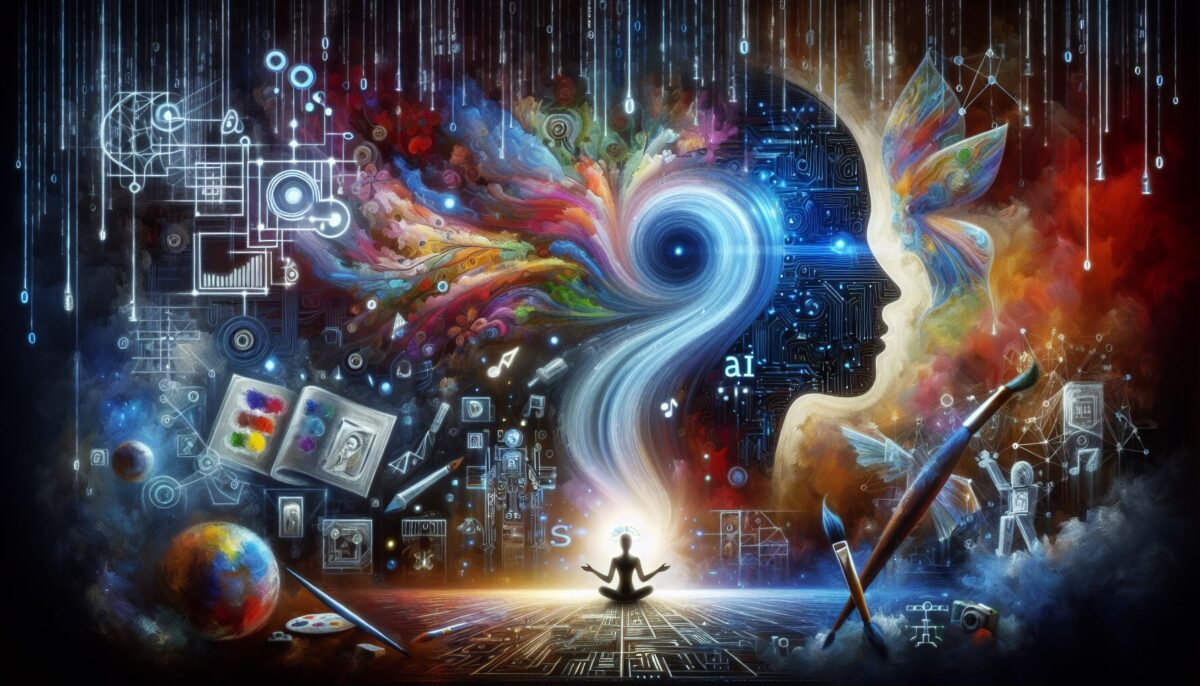
Hey tech aficionados! Grab your digital sketchpads and your VR headsets—I’m about to take you on a wild ride through how AI is changing creative arts. Yep, the once-human realm of brushes, chords, and typewriters is now being invaded—eh, enhanced—by artificial intelligence. It feels like just yesterday my robot vacuum was the most intelligent thing in my home, and now here we are looking at AI Picasso wannabes. Who would’ve thought?
A Brushstroke from My Algorithmic Friend
So, let’s dig into this—I promise it’ll be more entertaining than deciphering your cousin’s abstract Instagram poetry. AI in the visual arts is one of the most interesting corners of this new field.
Hello, AI Galleries!
Ever walked into a gallery and said out loud what everyone else was thinking? “I could do that in my sleep!” Well, now maybe your computer can too. AI models like those from DeepArt and OpenAI’s DALL-E are creating artworks that are genuinely impressive. It’s gotten to the point where some of these AI-generated pieces are fetching real money—like, you-can-buy-actual-stuff money, at major auctions.
The best part? These AI creations are often collaborations between code and human users who input their own artistic vision. Think of it like a paint-by-numbers kit, but the “numbers” are actually thousands of algorithms working together to decide whether that blob of blue looks better than one in chartreuse.
The Critics and the Code
Of course, this raises an important question: Are these AI ‘artists’ or just fancy renderers? Some say they’ll never understand the human condition. But, hey, neither do a lot of human artists, and they’re making it just fine. A robot learning to paint with AI might have as much luck capturing the human experience as your average abstract artist. If you ask me, the conversations it’s sparking are worth the price of admission.
Beats, Bytes, and AI Symphonies
Ever wondered what it would feel like to hear an AI compose a song that brings you tears (the good kind)? This is not sci-fi anymore. AI in music is going places you should definitely have on your radar.
Out of Tune or a New Tune?
AI music creators such as Jukedeck, AIVA, and even Google’s Magenta project are making waves. These platforms can compose anything from orchestral scores to catchy pop tunes, and they’re doing it with an understanding of musical theory that honestly surprised me. It’s like if Beethoven and a laptop had a very talented offspring.
And it’s not just about creating standalone tracks. AI can also assist musicians by providing backing instruments, suggesting chord sequences, and even offering album art ideas. I’ve used an AI tool myself for composing once and, while I think it sarcastically suggested a kazoo when it wasn’t necessary, it wasn’t half bad.
The Road to Virtual Grammys
While AI music still faces skepticism and purist scorn, the potential benefits are real. Musicians can expand their creative repertoires without worrying about technical constraints. Imagine the indie artist in their bedroom studio suddenly having access to expertise in classical composing, blues, and techno at their fingertips. They could be unstoppable, or at least have bragging rights on Spotify.
AI Writes the Script—or Does It?
Now, movies and literature, that’s where things get a bit trickier. AI wordsmiths like OpenAI’s GPT series have genuinely surprised me. Think back to your worst bout of writer’s block and imagine turning to a trained AI to spit out credible plot twists or even full chapters. Are they partly why some authors are looking so fresh-faced these days?
AI’s Storytelling Snippet
While AI might struggle with the nuance and depth required for literary greatness (not to mention getting its hands on existential dread), it’s making headway with short stories and scripts. Short film festivals have opened their doors to AI-generated scripts, and while these ventures aren’t threatening Tarantino just yet, they’re producing freaky plotlines and weird dialogues that are actually kind of fun.
The Novel Kind of Co-Author
Authors using AI tools for inspiration are finding them incredibly versatile brainstorming buddies. Need a medieval curse created? Or maybe some techno-babble for your next sci-fi story? AI might just offer up the literary version of a cold brew you desperately crave.
The Challenges Ahead
Let’s dial down the excitement for a second and take a realistic look at the challenges. AI in creative arts is still a wildcard in many ways.
Originality vs. Remix Culture
We’ve got to think about originality. AI models get their skills from existing databases, meaning they’re remixing rather than creating from scratch. Is that real creativity or just fancy sampling? It’s like wondering if a collage is art or if it’s just pieces of other art slapped together. I honestly go back and forth on this one.
Copyrights and Fair Use
And ah, the legal landmine that is copyright. If an AI wrote your hit song or painted a masterpiece, who owns it? The coder behind the curtain, the AI, or you, the human who pushes the button? Lawmakers are still scratching their heads over this one, and I don’t envy them.
What’s Next on the AI Canvas
Looking ahead, AI in creative arts will probably become more collaborative, where human creativity meets artificial intelligence. I picture AI as your never-judging assistant, perfect for brainstorming sessions that leave no crazy idea unexplored.
Better Imitation, New Creation
We might see AI getting much better at imitation, which could redefine creativity itself. Imagine AI systems so advanced they write TV shows or films so compelling, audiences won’t care who, or what, wrote them. That’s both exciting and a little unsettling.
So as we speed into this new territory, let’s keep pushing boundaries and feeding our imaginations. Whether you’re an artist, a coder, or someone in between, the possibilities are genuinely exciting.
That’s all for today, folks! I’m off to see if my AI assistant can help me with my next piece. Or maybe I’ll just ask it for latte art ideas. Until next time, keep dreaming about what your AI might one day create!
Related: Unlocking the Secrets of Longevity: Living to 150 and Beyond
