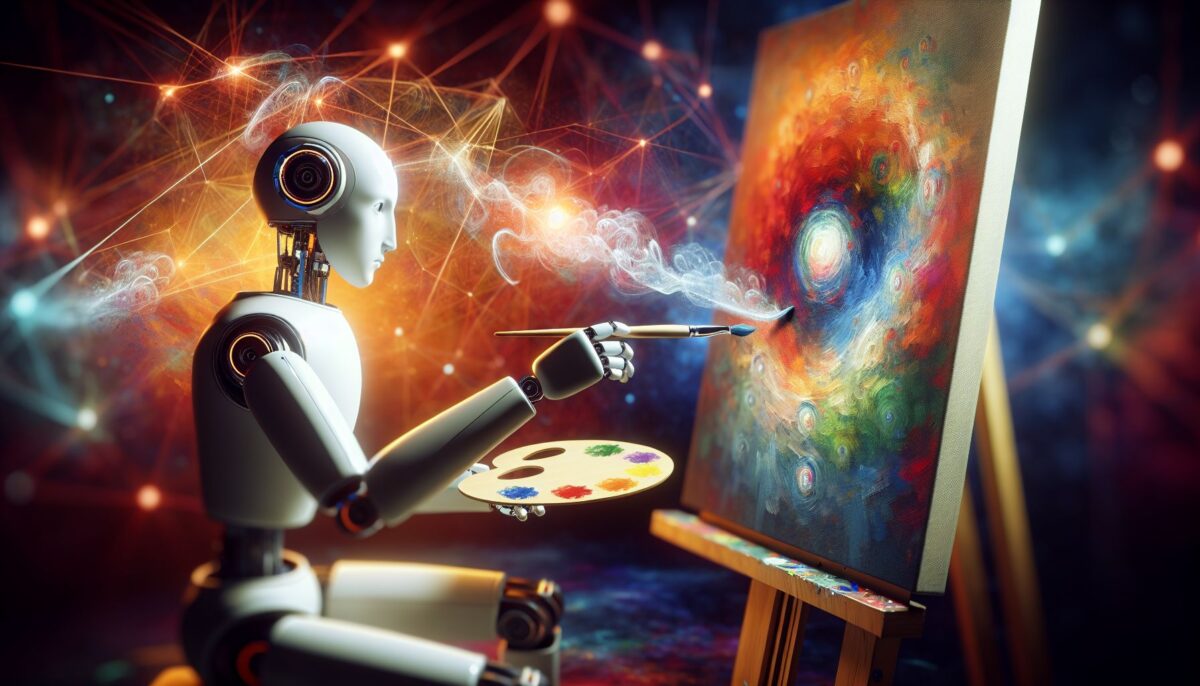
Hey tech enthusiasts! Ever find yourself in awe, wondering just how much we’ve come to rely on Artificial Intelligence? Our working lives, social interaction habits, and even how we drive (or don’t have to drive?) are all entering a stage that once lived in the realm of science fiction. As I sat in my living room recently, surrounded by a “battle zone” of charging cables, virtual assistants, and smart-home hubs, I faced a delightful realization. The same technology that’s making my life easier is now elbowing its way into the world of creative arts. So, let’s cozy up and talk about how AI is revolutionizing creativity, pushing boundaries, and shaking up traditional industries like never before.
AI: The Artist’s Trusted Brush
You know, there was a time when the phrase “artificial intelligence” conjured images of sleek machines calculating probabilities, crunching datasets, managing stock prices, or maybe even taking over the world, Terminator-style. But, oh boy, the tide has turned! Today, AI is being used much like a brush by artists. From painting and music composition to writing and even film-making, AI is redefining what’s possible.
AI algorithms now collaborate with artists to produce pieces that are not only innovative but often genuinely mind-blowing. Picture this: An artist paints something bright and luminous, but instead of stopping there, they feed their canvas into an AI, which suggests subtle tweaks that enhance the emotional expression of the work. Boom, masterpiece times two!
The Code Behind Musical Compositions
More than just putting brushes to canvas, AI jumps into the world of music composition. It’s the maestro conducting a virtual symphony orchestra. AI platforms like OpenAI’s MuseNet analyze thousands of music pieces, from Bach to the Beatles, learning those unique cadences, tonality shifts, and emotional peaks. The result? You might unknowingly find yourself tapping your feet to a melody that’s born from an algorithm!
These days, there’s a surge in musicians using AI-powered tools for collaborative composition. The AI suggests harmonies, identifies potential bridges, and even creates entire orchestral movements. Curious? You might want to check out what’s happening over at Amper Music, where musicians and machines jam together, creating symphony upon symphony!
Writing the Next Bestseller
Writers, rejoice! AI’s not ignoring you, quite the opposite. Consider this: AI has also jumped into the wild world of literature, flipping through genres faster than you can swipe past breakfast posts on social media. And while I’m not predicting we’ll see a robot Hemingway sipping Mojitos at a Cuban bar anytime soon, the kind of content generated by AI programs like GPT-3 is impressive, to say the least.
Say you’re writing a dystopian novel about space llamas (one can speculate, right?). You’ve hit that all-too-familiar wall of writer’s block. No worries. AI can step in, suggesting plot twists or even entire chapters, just waiting for your edit and flair. The creative process becomes a conversation, a back-and-forth with an algorithm that learns your preferences over time.
Breaking Barriers and Building Bridges
As progressive as this all sounds, AI in creative arts isn’t without its fair share of debate, kinda like pineapple on pizza. But the impulse to resist such a big shift? That’s just human nature clinging to what was. The fearful, not-quite-brave-enough part of us, concerned about losing the “human touch.” Yet, isn’t it thrilling to consider the potential collaborative future where AI becomes an extension of the artist’s mind, bridging cultures and bringing untold stories to life? Personal anecdote: I once attended an art exhibit that showed collaborations between AI and visual artists from around the world. The blend of distinct styles, beautifully intertwined by AI’s impartial eyes, left a lasting impression.
Ethical Considerations and the Future Ahead
Just when you thought we could coast into an easy “happily ever after,” here’s a curveball for you: ethics. Trust me, I wouldn’t dance around the subject. Can AI potentially flood the market with content that’s an echo chamber of experienceless expression? Sure. But, like any tool, it’s all in how you decide to use it. Will future art galleries be filled with AI-savvy critics analyzing brushstrokes and probing creation stories as honestly as today’s galleries do? It’s possible, yet also exciting!
In the end, the conversation around AI and creative arts centers on balance and vision. It’s about training AI to be more adaptive, more attuned to nuances unique to particular cultures or individual artists. The more intimate the conversation between human and machine creatives becomes, the broader and less biased the spectrum of artistic achievement will be.
A Colorful, Algorithmic Tomorrow
So, what’s next on this colorful, algorithm-driven journey? An AI-generated national anthem that resonates universally? Perhaps AI-designed stageplays that actively react with live audiences, elevating them to an unforgettable immersive experience? One can only imagine, but what’s for sure is that AI is absolutely here to stay in the world of creative enterprise, and it’s shaking things up for the better.
Before I sign off, here’s a quick thought experiment. Think about your favorite piece of art in any medium. What was it that captured your heart? Now imagine that piece being not only technically sound but loaded with the rich emotional depth possible through a collaboration with AI. Wild, right? I say bring it on!
If today’s artists, painters, musicians, writers, can embrace AI as a creative ally, the possibilities are endless. Far from replacing the human element, AI amplifies it, arguably elevating creativity to untouched heights that are waiting in the wings. I, for one, can’t wait to see where this creative revolution takes us next.
Catch you all on the next wave of innovation!
