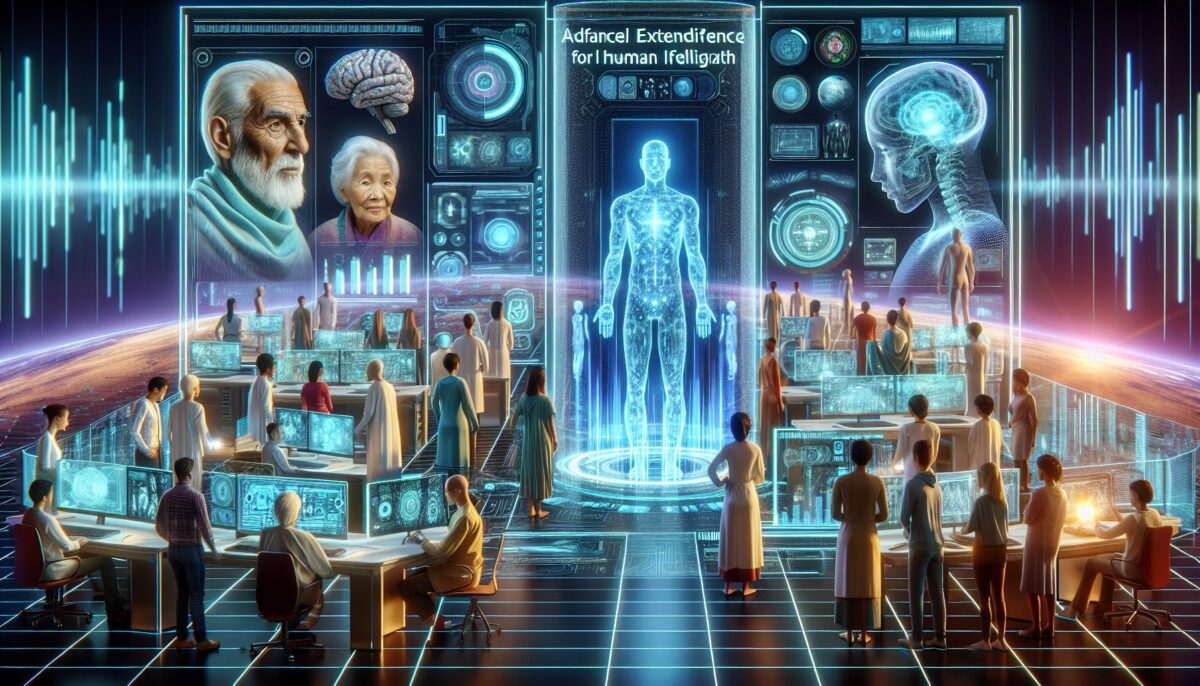
Introduction: The Quest for Immortality
Imagine a world where age is just a number, where the frailties of old age are but a distant memory. Right now, major leaps in AI and medical technology might not make immortality possible just yet, but they’re creating a reality where longevity breakthroughs aren’t just pipe dreams anymore. They’re actual, achievable goals.
For centuries, humans have tried to conquer aging. It used to be the stuff of folklore, something alchemists and philosophers could only dream about. But with advanced artificial intelligence developing so fast, everything is changing. This isn’t science fiction anymore. It’s a real possibility that might actually be within our reach. So let’s dig into how AI could completely change our fight against time itself.
The Role of AI in Longevity Research
AI isn’t some distant fantasy. It’s here now and already producing results in longevity research. From spotting new aging biomarkers to creating personalized medicine, AI has tons of applications for extending human lifespan.
AI-Powered Drug Discovery
The traditional pharmaceutical industry hits massive roadblocks that slow down drug discovery. But machine learning algorithms can analyze huge amounts of chemical compounds to find promising candidates for anti-aging drugs. Companies like Insilico Medicine are using AI to discover new drugs way faster than old-school methods, cutting both cost and time.
AI algorithms can sort through mountains of biological data to identify potential biological pathways involved in aging. This lets researchers target interventions more precisely, opening doors to discoveries that could make age-related diseases nearly obsolete.
Personalized Medicine through AI
Personalized medicine gets supercharged when AI enters the picture. Machine learning models can analyze your genomic data, lifestyle, and even microbiome to recommend treatment plans made just for you. Companies like Gero use AI algorithms to predict how lifestyle changes or specific treatments will affect individual health over a lifetime.
What makes AI truly game-changing is its ability to crunch massive amounts of data in real-time, creating treatment plans that are custom-built for each person’s unique genetic and environmental makeup. It’s like having a super-intelligent personal trainer who knows your biological limits down to the cellular level.
AI and Cellular Rejuvenation
Cellular rejuvenation usually sounds like something straight out of sci-fi movies. A body that heals at the molecular level, reversing or stopping aging processes completely. AI’s potential in cellular rejuvenation means optimizing cellular repair mechanisms or even reprogramming how cells function. Machine learning systems can now simulate how different compounds would affect cellular health, giving us roadmaps for mechanisms that repair or replace damaged tissues.
Longevity and Age-Related Disease Forecasting
Aging doesn’t happen in isolation. The best longevity tech identifies both how and when age-related diseases like Alzheimer’s, cardiovascular diseases, and cancers will strike. AI’s predictive analytics can analyze everything from medical history to lifestyle choices to warn us about diseases before they become serious problems.
Healthcare startups like BioAge are using AI to find biomarkers linked to aging, predicting when and how diseases might hit. By understanding these tipping points, preventative measures become not just possible but incredibly precise.
Challenges and Ethical Considerations
These technologies are exciting, but they come with serious dilemmas, from economic inequality to moral questions.
The Ethical Conundrum
Extending human longevity sounds amazing, but it raises tough questions about resource allocation and fairness. Will this technology be available to everyone or just the wealthy elite? The AI that powers longevity tech is highly specialized and data-heavy, which brings up concerns about personal data privacy and who owns that information.
Plus, if interventions delay death and improve quality of life, they could strain our planet’s already limited resources even more. Future policies will need to weigh the ethics of extending life while balancing technology with social fairness.
The Socioeconomic Debate
With longer lifespans, will people retire later or jump back into the workforce, potentially reshaping society as we know it? There’s a big question about how healthcare systems and existing social structures would handle populations that live much longer. And there are practical biological questions too: what about brain plasticity? Will wear and tear on neural structures make older people less adaptable?
Conclusion: Stepping Into a Bright Future
If we’re watching the birth of a new tech-driven era, longevity AI is delivering it. Every breakthrough in AI-driven longevity research gets us closer to a future where aging might not just be managed but actually reversed. A future where our final years are lived with energy and health.
The complex puzzles of aging and longevity are like a high-stakes chess game, and AI is becoming the grandmaster. Strategic yet thoughtful, powerful yet considerate. This new era holds huge promise that doesn’t have to belong only to billionaire dreamers. But universal longevity will only happen when technology meets ethical planning and fair access.
In a world where age might someday become just another number in our data-driven lives, pursuing longevity isn’t just about living longer. It’s about improving quality of life. A meaningful quest to make sure each added year comes with health, happiness, and vitality.
Keep watching, everyone. Science hasn’t conquered time yet, but with AI leading the way, we’re racing toward a future that’s starting to look like those old fairy tales about eternal youth. Whether or not we get there, this journey is going to be one hell of a ride.
