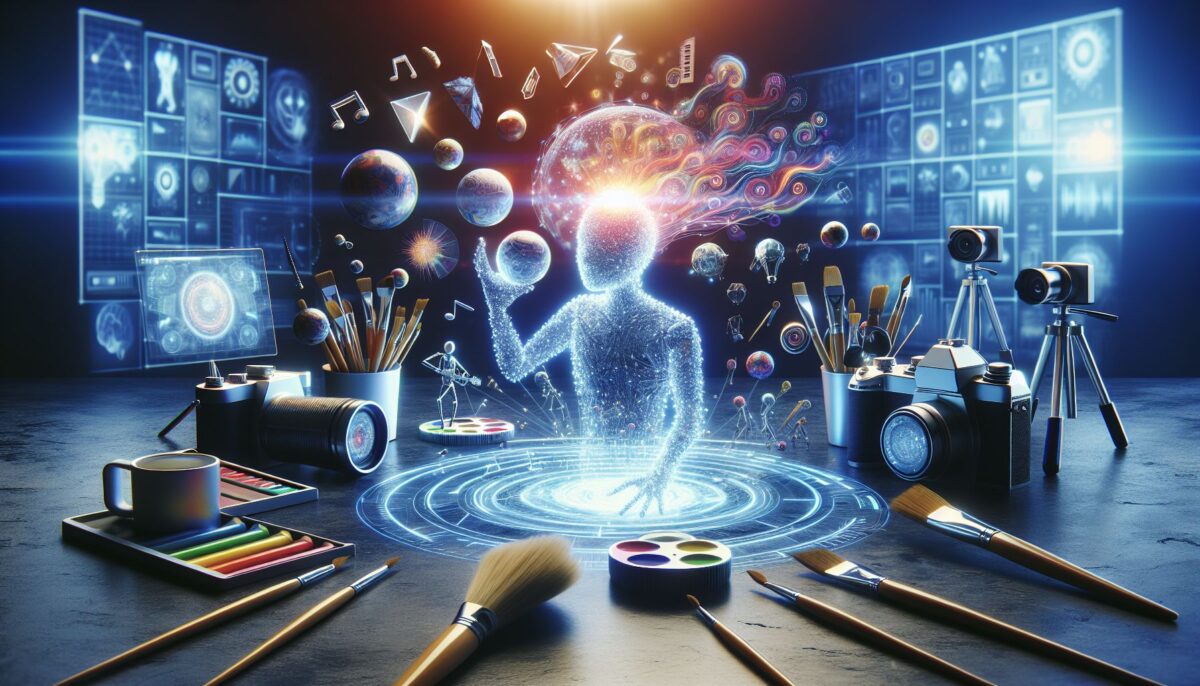
Technology keeps changing, and artificial intelligence has become both a source of real innovation and endless possibility. People often treat AI like some magic solution that’ll transform entire industries. But I find it fascinating how AI is writing its own story in the creative world, making us question everything we thought we knew about art and expression. Let’s look at where creativity meets artificial intelligence and what’s actually happening.
The Rise of AI in the Creative Domain
When people talk about AI, they usually mention automation, machine learning, or worry about robots taking over jobs. But honestly, one of the coolest things happening is how AI is changing creative arts. It can crunch through massive amounts of data to spot patterns and trends, and that’s transforming music, visual arts, and writing in ways I never expected.
1. AI and Visual Arts: Redefining the Aesthetic
AI’s move into visual arts has been wild to watch. Neural networks can now create artwork that doesn’t just copy existing styles but actually invents new ones. That makes me wonder what creativity really means. Remember when Christie’s auctioned off an AI-generated piece called “Edmond de Belamy” for $432,500? That was a real turning point. It proved AI art has actual market value, which is this weird mix of human thinking and machine output.
AI isn’t just a tool for artists anymore. It’s become their creative partner. Programs like DeepArt and RunwayML let creators apply amazing styles and effects that go way beyond traditional digital art. OpenAI’s DALL-E takes this even further. This neural network creates incredible images just from text descriptions, imagining completely new concepts that no human has visualized before.
2. Algorithmic Symphony: AI’s Role in Music Composition
Music has this universal language and emotional power, and AI is definitely making its mark here too. It’s creating new paths in music production and giving musicians tools to generate fresh soundscapes. Rock, classical, electronic – artists across genres are using AI to make compositions that break all the traditional rules.
Take AIVA (Artificial Intelligence Virtual Artist). It’s creating symphonic soundtracks that aren’t just technically coherent but emotionally moving. AIVA studies thousands of musical scores to understand structure and patterns, then creates original compositions. Artists like Arca and Holly Herndon are already working with AI as a creative partner to completely reimagine how they tell stories through music.
3. AI in Literature: A New Narrative Unfolds
You’d think writing compelling stories and emotional narratives would be purely human territory. But AI is pushing into literature too, using its analytical power to help authors and publishers. Natural Language Processing tools and AI platforms are helping writers brainstorm, develop plots, and polish their drafts.
AI writing assistants like Sudowrite and Jasper AI have become real allies for authors. They offer suggestions, boost productivity, and can even write entire pieces. This pushes the boundaries of what we consider authorship. The growing relationship between AI and literature gives writers a completely new way to approach their craft. It’s more about working together than competing.
The Human-Machine Collaborative Canvas
Where AI and creativity meet creates amazing opportunities for collaboration, but we need to talk about the implications and ethics of this partnership. Originality means something different when algorithms can copy and even beat human creativity. Are these works really art if they don’t have human touch? There’s no simple answer to that question.
4. Ethical Considerations: Revolution or Reimagination?
The ethics of AI in creativity comes down to what we mean by originality and ownership. As AI becomes more central to creative work, it challenges how we think about authorship and copyright. If an AI creates a painting, who owns the rights? The human who started the process, the programmers who built the AI, or the neural network itself?
There’s also the fact that AI learns from existing works, which raises questions about creative theft. This gray area is sparking important conversations about how we define art, creativity, and ownership in our digital world.
Charting the Path Forward
We’re at this really interesting point where AI entering the creative process offers huge potential. For artists, AI can break through creative blocks and bring fresh perspectives. It gives new ways to experiment and explore, to imagine beyond what we thought was possible.
5. Inviting Innovation: Where Do We Go From Here?
The combination of AI and creativity makes us rethink how we define art and the creative process. As AI keeps advancing, artists and creators should see these smart tools as partners, not replacements. This mindset opens up exploration of new genres, techniques, and ways of thinking.
Technology moves fast, and I think embracing AI’s progress while keeping human creativity at the center creates a path to a future full of artistic innovation. Educators, artists, tech people, and philosophers all need to talk about AI’s impact on creativity so we can use its potential ethically and responsibly.
Conclusion: The Next Renaissance?
As we figure out this new territory, AI is more than just a tool. It’s a creative partner. A tech-forward society isn’t about machines replacing human creativity but expanding it. The real magic happens when AI’s analytical power meets human intuition and emotion, creating this unstoppable force of innovation and artistic expression.
The blend of human and artificial creativity is creating a kind of renaissance. It’s an era where technology enhances the creative spirit and gives artists power to transform ordinary into extraordinary. We’re at the edge of a new age of creation, where AI’s potential doesn’t just boost our abilities but challenges us to redefine what it means to be an artist today. As we move into this new world, creativity is only limited by our imagination.
