The Proboards38 Blog

Field notes from the operator's chair: postmortems, load tests, migrations, and governance audits for forum-class platforms of 10k+ users.

Archives (page 12 of 12)

Exploring the Brave New World of AI in Creative Arts

Hey tech enthusiasts! Ever find yourself in awe, wondering just how much we’ve come to rely on Artificial Intelligence? Our working lives, social interaction habits, and even how we drive (or don’t have to drive?) are all entering a stage that once lived in the realm of science fiction. As I sat in my living room recently, surrounded by a “battle zone” of charging cables, virtual assistants, and smart-home hubs, I faced a delightful realization. The same technology that’s making my life easier is now elbowing its way into the world of creative arts. So, let’s cozy up and talk about how AI is revolutionizing creativity, pushing boundaries, and shaking up traditional industries like never before.

AI: The Artist’s Trusted Brush

You know, there was a time when the phrase “artificial intelligence” conjured images of sleek machines calculating probabilities, crunching datasets, managing stock prices, or maybe even taking over the world, Terminator-style. But, oh boy, the tide has turned! Today, AI is being used much like a brush by artists. From painting and music composition to writing and even film-making, AI is redefining what’s possible.

AI algorithms now collaborate with artists to produce pieces that are not only innovative but often genuinely mind-blowing. Picture this: An artist paints something bright and luminous, but instead of stopping there, they feed their canvas into an AI, which suggests subtle tweaks that enhance the emotional expression of the work. Boom, masterpiece times two!

The Code Behind Musical Compositions

More than just putting brushes to canvas, AI jumps into the world of music composition. It’s the maestro conducting a virtual symphony orchestra. AI platforms like OpenAI’s MuseNet analyze thousands of music pieces, from Bach to the Beatles, learning those unique cadences, tonality shifts, and emotional peaks. The result? You might unknowingly find yourself tapping your feet to a melody that’s born from an algorithm!

These days, there’s a surge in musicians using AI-powered tools for collaborative composition. The AI suggests harmonies, identifies potential bridges, and even creates entire orchestral movements. Curious? You might want to check out what’s happening over at Amper Music, where musicians and machines jam together, creating symphony upon symphony!

Writing the Next Bestseller

Writers, rejoice! AI’s not ignoring you, quite the opposite. Consider this: AI has also jumped into the wild world of literature, flipping through genres faster than you can swipe past breakfast posts on social media. And while I’m not predicting we’ll see a robot Hemingway sipping Mojitos at a Cuban bar anytime soon, the kind of content generated by AI programs like GPT-3 is impressive, to say the least.

Say you’re writing a dystopian novel about space llamas (one can speculate, right?). You’ve hit that all-too-familiar wall of writer’s block. No worries. AI can step in, suggesting plot twists or even entire chapters, just waiting for your edit and flair. The creative process becomes a conversation, a back-and-forth with an algorithm that learns your preferences over time.

Breaking Barriers and Building Bridges

As progressive as this all sounds, AI in creative arts isn’t without its fair share of debate, kinda like pineapple on pizza. But the impulse to resist such a big shift? That’s just human nature clinging to what was. The fearful, not-quite-brave-enough part of us, concerned about losing the “human touch.” Yet, isn’t it thrilling to consider the potential collaborative future where AI becomes an extension of the artist’s mind, bridging cultures and bringing untold stories to life? Personal anecdote: I once attended an art exhibit that showed collaborations between AI and visual artists from around the world. The blend of distinct styles, beautifully intertwined by AI’s impartial eyes, left a lasting impression.

Ethical Considerations and the Future Ahead

Just when you thought we could coast into an easy “happily ever after,” here’s a curveball for you: ethics. Trust me, I wouldn’t dance around the subject. Can AI potentially flood the market with content that’s an echo chamber of experienceless expression? Sure. But, like any tool, it’s all in how you decide to use it. Will future art galleries be filled with AI-savvy critics analyzing brushstrokes and probing creation stories as honestly as today’s galleries do? It’s possible, yet also exciting!

In the end, the conversation around AI and creative arts centers on balance and vision. It’s about training AI to be more adaptive, more attuned to nuances unique to particular cultures or individual artists. The more intimate the conversation between human and machine creatives becomes, the broader and less biased the spectrum of artistic achievement will be.

A Colorful, Algorithmic Tomorrow

So, what’s next on this colorful, algorithm-driven journey? An AI-generated national anthem that resonates universally? Perhaps AI-designed stageplays that actively react with live audiences, elevating them to an unforgettable immersive experience? One can only imagine, but what’s for sure is that AI is absolutely here to stay in the world of creative enterprise, and it’s shaking things up for the better.

Before I sign off, here’s a quick thought experiment. Think about your favorite piece of art in any medium. What was it that captured your heart? Now imagine that piece being not only technically sound but loaded with the rich emotional depth possible through a collaboration with AI. Wild, right? I say bring it on!

If today’s artists, painters, musicians, writers, can embrace AI as a creative ally, the possibilities are endless. Far from replacing the human element, AI amplifies it, arguably elevating creativity to untouched heights that are waiting in the wings. I, for one, can’t wait to see where this creative revolution takes us next.

Catch you all on the next wave of innovation!
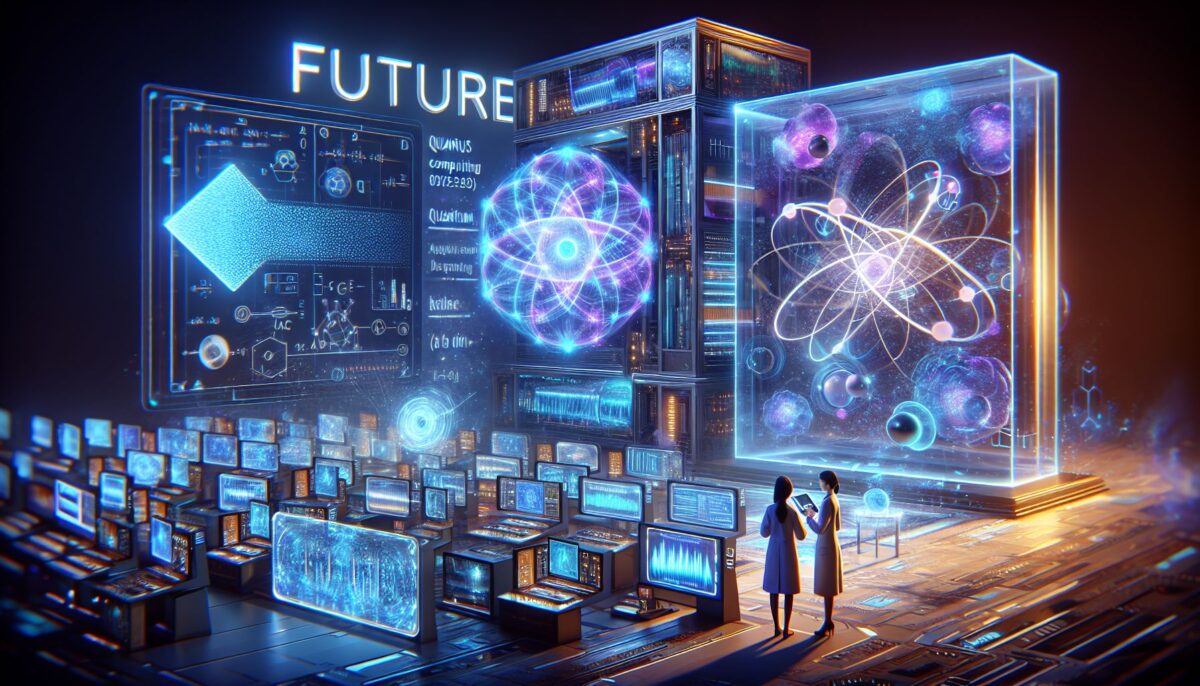
The Future is Crystal Clear: Quantum Computing’s New Dawn

Hey, tech pals! Have you ever had one of those moments when you realize the future you’ve been dreaming of is right around the corner? Well, hold onto your hats, because today we’re going deep into the mind-bending world of quantum computing. That’s right, that elusive, almost mythical beast of computing. It’s not just a sci-fi concept anymore—it’s happening, and it’s about to change everything.

Quantum Leap or Just a Fancy Calculator?

So, why all the fuss about quantum computing? Let’s break it down. While our trusty classical computers (the ones you’re probably using to read this) are incredibly fast and can do lots of calculations, they handle problems in a pretty linear way. Enter quantum computing, which doesn’t just think outside the box—it creates a new box, possibly in a parallel universe!

Quantum computers use qubits instead of bits. Without getting too heady, qubits can exist in multiple states simultaneously thanks to something called superposition—one of quantum mechanics’ party tricks. This allows these machines to solve complex problems much faster than classical computers. The potential applications? We’re still figuring that out, but the possibilities seem endless.

A Quantum Reality: Breakthroughs in the Here and Now

Now, onto some real stuff—what’s happening in the quantum space that’s got geeks like me doing a happy dance?

Real-World Applications

First up, let’s talk about encryption. Today’s encryption methods are pretty sturdy, but quantum computers could break them easily, which might sound scary. But the flip side is that quantum encryption could make our data even more secure. Companies like IBM and Google are working in this arena, trying to harness quantum power to secure data with methods that make present-day security measures look like locks from the Stone Age.

Then there’s logistics. Imagine optimizing delivery routes or managing supply chain logistics with an efficiency that destroys anything we’ve ever seen before. Quantum algorithms can optimize problems that currently take supercomputers days or even weeks—potentially in seconds.

Healthcare Revolution

If there’s one area where quantum could truly save lives, it’s healthcare. The prospect of simulating complex molecules for drug development at record speeds is exciting. Quantum computers could help pinpoint how medications interact with tons of different variables. We’re talking personalized medicine on a scale we haven’t achieved yet, with the promise of faster discoveries of cures and treatments.

Challenges Ahead: It Ain’t All Rainbows and Qubits

Of course, no tech revolution is complete without a few hiccups—quantum computing included. Supercooled environments, pesky decoherence issues, and error rates higher than we’d like are just a few of the hurdles waiting for us. Quantum bits are finicky. They require delicate handling that makes Jenga seem stable by comparison.

The Expert Brain Drain

There’s also the issue of expertise. Quantum computing is a bit dense to wrap your head around (trust me, I’ve tried). We’re seeing a bottleneck of talent because the schools can’t churn out quantum whizzes fast enough. If you’re thinking about career changes, now might be the time for a pivot—it could be the most exciting field since the Internet took off.

The Road Ahead: Speculations, Hopes, and Dreams

Now, let’s put the speculation hat on and gaze into the crystal ball. Will everyone have a quantum laptop on their desk by 2030? Not likely. But quantum computing could evolve like the internet did—its initial unreachable promise gives way to transformative impacts over a few decades.

Get ready for changes in industries we can’t imagine yet. Climate modeling and energy distribution could reach unprecedented efficiency, helping us respond better to global challenges. Perhaps one day we’ll look back on the days when computers just “thought” in 0s and 1s. Who knows? Maybe quantum computing will crack the age-old question of what’s beyond a black hole—not to mention how to effectively remove that spaghetti stain from your favorite shirt (though perhaps these priorities may vary).

Conclusion: Embracing the Quantum Journey

So, there you have it—a peek into the mind-bending possibilities of quantum computing. Whether you’re thrilled about super-secure data, personalized healthcare, or just exploring the cosmic unknown with geeks like me, one thing is certain: we’re standing on the edge of something huge.

Until next time, keep your qubits sharp and your ideas quirkier. In the world of quantum, anything—and I mean anything—is possible.

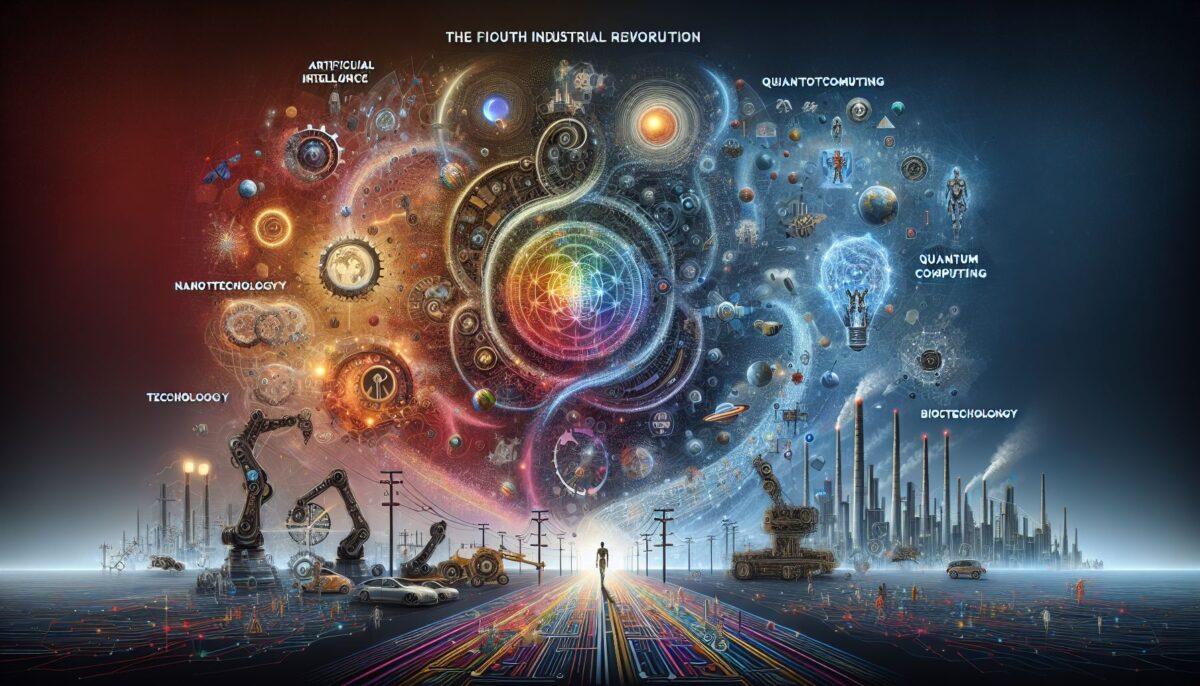
the Fourth Industrial Revolution: Embrace the Transformative Tides

Hey fellow tech enthusiasts! Grab a comfy chair, your favorite beverage, and let’s talk about something that’s been completely changing how we work and live: the Fourth Industrial Revolution. I know, it sounds like the title of a dystopian sci-fi film, but trust me, this revolution is real and honestly more exciting than scary. I’m here to share why I’m so pumped about it and why you should be too. Let’s get into it!

Before We Talk Robots, Let’s Time Travel

First, a quick trip down memory lane for some context! The First Industrial Revolution started in the late 18th century with steam and water power leading the charge. The Second, in the late 19th century, brought electricity to our factories and cities. Fast forward to the late 20th century, and we got the Third Industrial Revolution, where computers started showing up in businesses and changed everything.

And now? We’re living through the Fourth Industrial Revolution. This is the era of AI, IoT, robotics, quantum computing, and yes, blockchain (whether you love it or hate it). It’s like a tech all-star game where each player keeps outdoing the last.

Your Pocket AI Companion: From Sci-Fi to Here-and-Now

Let’s start with the big one: Artificial Intelligence. Sure, it sounds ominous if you’ve watched too many movies, but the daily reality is way more mundane. Think your smartphone assistant setting your alarm or Netflix somehow knowing exactly what you want to watch next. Honestly, who wouldn’t want a personal assistant available 24/7?

AI is doing incredible things in healthcare, where machine learning can spot diseases faster and more accurately than many human doctors. It’s speeding up drug discovery processes that used to take decades. In finance, robo-advisors are changing how we invest, giving you personalized financial advice with a few taps. It’s not magic, but it feels pretty close sometimes.

Robots: They’re Just Here to Help

Robots are about to become your new co-workers. They’re not stuck on car assembly lines anymore. We’re talking about collaborative robots (or ‘cobots’ if you want to sound cool) in offices and warehouses, handling the boring, repetitive stuff. Pretty soon, they might even make your latte with perfect foam art. I’m here for it!

In agriculture, drones are checking crop health with precision no human could match. In construction, autonomous machines are actually building homes. So while I mentally play “We are the Robots” by Kraftwerk, I’m also thinking about what this means for us humans. We get to step away from mind-numbing tasks and focus on the creative, problem-solving work we’re actually good at.

IoT: Disrupting, Distracting, and Delightful

Now for everyone’s favorite buzzword: IoT, or the Internet of Things. It’s basically every device in your life talking to each other. Your smart fridge, lights, even your toaster are all connected now. The upside? Your fridge tells you when you’re out of milk and your house warms up before you get home. The downside? Your life starts feeling like a video game, and yes, your toaster might actually send you emails.

But IoT goes way beyond smart homes. Think smart cities that optimize energy use and traffic flow. It’s sustainability, convenience, and efficiency all rolled into one. Sometimes it works great, sometimes it’s frustrating as hell, but it’s definitely changing how we live.

The Blurring Line: Reality and Virtual Reality

The Fourth Industrial Revolution is messing with our perception of reality in the best way. Engineers are building products in digital factories before they exist in real life. Museum visitors can experience history through AR instead of just reading plaques. We’re completely redefining what’s possible.

Imagine putting on a VR headset and going for a run through the Swiss Alps from your living room! Or medical students practicing surgery in virtual reality before touching a real patient. It’s a complete game-changer for education and training.

Blockchain: The Unlikely Hero

I can’t talk about this revolution without mentioning blockchain. It’s not just the mysterious tech behind cryptocurrencies anymore. It’s actually solving real problems with transactions and data security. Smart contracts, transparent voting systems, supply chain tracking. It’s less “magic internet money” and more “boring but important infrastructure.”

Wrapping It Up: Are You Ready for Revolution?

So, what’s next? Honestly, I have no idea, and that’s what makes it exciting. The Fourth Industrial Revolution is happening right now, changing everything we thought we knew about technology and how it fits into our lives. Our grandkids are definitely going to quiz us about this period in history.

Are there problems? Oh, absolutely. Data privacy, cybersecurity, job displacement, ethical concerns about AI. These are real issues that we need to tackle head-on. But I think we’re smart enough and resourceful enough to figure it out as we go. So buckle up, stay curious, and get ready for whatever comes next. It’s going to be wild!

**Harnessing the Power of AI: A Glimpse into the Future of Creativity**

Technology keeps changing, and artificial intelligence has become both a source of real innovation and endless possibility. People often treat AI like some magic solution that’ll transform entire industries. But I find it fascinating how AI is writing its own story in the creative world, making us question everything we thought we knew about art and expression. Let’s look at where creativity meets artificial intelligence and what’s actually happening.

The Rise of AI in the Creative Domain

When people talk about AI, they usually mention automation, machine learning, or worry about robots taking over jobs. But honestly, one of the coolest things happening is how AI is changing creative arts. It can crunch through massive amounts of data to spot patterns and trends, and that’s transforming music, visual arts, and writing in ways I never expected.

1. AI and Visual Arts: Redefining the Aesthetic

AI’s move into visual arts has been wild to watch. Neural networks can now create artwork that doesn’t just copy existing styles but actually invents new ones. That makes me wonder what creativity really means. Remember when Christie’s auctioned off an AI-generated piece called “Edmond de Belamy” for $432,500? That was a real turning point. It proved AI art has actual market value, which is this weird mix of human thinking and machine output.

AI isn’t just a tool for artists anymore. It’s become their creative partner. Programs like DeepArt and RunwayML let creators apply amazing styles and effects that go way beyond traditional digital art. OpenAI’s DALL-E takes this even further. This neural network creates incredible images just from text descriptions, imagining completely new concepts that no human has visualized before.

2. Algorithmic Symphony: AI’s Role in Music Composition

Music has this universal language and emotional power, and AI is definitely making its mark here too. It’s creating new paths in music production and giving musicians tools to generate fresh soundscapes. Rock, classical, electronic – artists across genres are using AI to make compositions that break all the traditional rules.

Take AIVA (Artificial Intelligence Virtual Artist). It’s creating symphonic soundtracks that aren’t just technically coherent but emotionally moving. AIVA studies thousands of musical scores to understand structure and patterns, then creates original compositions. Artists like Arca and Holly Herndon are already working with AI as a creative partner to completely reimagine how they tell stories through music.

3. AI in Literature: A New Narrative Unfolds

You’d think writing compelling stories and emotional narratives would be purely human territory. But AI is pushing into literature too, using its analytical power to help authors and publishers. Natural Language Processing tools and AI platforms are helping writers brainstorm, develop plots, and polish their drafts.

AI writing assistants like Sudowrite and Jasper AI have become real allies for authors. They offer suggestions, boost productivity, and can even write entire pieces. This pushes the boundaries of what we consider authorship. The growing relationship between AI and literature gives writers a completely new way to approach their craft. It’s more about working together than competing.

The Human-Machine Collaborative Canvas

Where AI and creativity meet creates amazing opportunities for collaboration, but we need to talk about the implications and ethics of this partnership. Originality means something different when algorithms can copy and even beat human creativity. Are these works really art if they don’t have human touch? There’s no simple answer to that question.

4. Ethical Considerations: Revolution or Reimagination?

The ethics of AI in creativity comes down to what we mean by originality and ownership. As AI becomes more central to creative work, it challenges how we think about authorship and copyright. If an AI creates a painting, who owns the rights? The human who started the process, the programmers who built the AI, or the neural network itself?

There’s also the fact that AI learns from existing works, which raises questions about creative theft. This gray area is sparking important conversations about how we define art, creativity, and ownership in our digital world.

Charting the Path Forward

We’re at this really interesting point where AI entering the creative process offers huge potential. For artists, AI can break through creative blocks and bring fresh perspectives. It gives new ways to experiment and explore, to imagine beyond what we thought was possible.

5. Inviting Innovation: Where Do We Go From Here?

The combination of AI and creativity makes us rethink how we define art and the creative process. As AI keeps advancing, artists and creators should see these smart tools as partners, not replacements. This mindset opens up exploration of new genres, techniques, and ways of thinking.

Technology moves fast, and I think embracing AI’s progress while keeping human creativity at the center creates a path to a future full of artistic innovation. Educators, artists, tech people, and philosophers all need to talk about AI’s impact on creativity so we can use its potential ethically and responsibly.

Conclusion: The Next Renaissance?

As we figure out this new territory, AI is more than just a tool. It’s a creative partner. A tech-forward society isn’t about machines replacing human creativity but expanding it. The real magic happens when AI’s analytical power meets human intuition and emotion, creating this unstoppable force of innovation and artistic expression.

The blend of human and artificial creativity is creating a kind of renaissance. It’s an era where technology enhances the creative spirit and gives artists power to transform ordinary into extraordinary. We’re at the edge of a new age of creation, where AI’s potential doesn’t just boost our abilities but challenges us to redefine what it means to be an artist today. As we move into this new world, creativity is only limited by our imagination.

The New Frontier of Longevity: How Advanced AI is Extending Human Lifespan

Introduction: The Quest for Immortality

Imagine a world where age is just a number, where the frailties of old age are but a distant memory. Right now, major leaps in AI and medical technology might not make immortality possible just yet, but they’re creating a reality where longevity breakthroughs aren’t just pipe dreams anymore. They’re actual, achievable goals.

For centuries, humans have tried to conquer aging. It used to be the stuff of folklore, something alchemists and philosophers could only dream about. But with advanced artificial intelligence developing so fast, everything is changing. This isn’t science fiction anymore. It’s a real possibility that might actually be within our reach. So let’s dig into how AI could completely change our fight against time itself.

The Role of AI in Longevity Research

AI isn’t some distant fantasy. It’s here now and already producing results in longevity research. From spotting new aging biomarkers to creating personalized medicine, AI has tons of applications for extending human lifespan.

AI-Powered Drug Discovery

The traditional pharmaceutical industry hits massive roadblocks that slow down drug discovery. But machine learning algorithms can analyze huge amounts of chemical compounds to find promising candidates for anti-aging drugs. Companies like Insilico Medicine are using AI to discover new drugs way faster than old-school methods, cutting both cost and time.

AI algorithms can sort through mountains of biological data to identify potential biological pathways involved in aging. This lets researchers target interventions more precisely, opening doors to discoveries that could make age-related diseases nearly obsolete.

Personalized Medicine through AI

Personalized medicine gets supercharged when AI enters the picture. Machine learning models can analyze your genomic data, lifestyle, and even microbiome to recommend treatment plans made just for you. Companies like Gero use AI algorithms to predict how lifestyle changes or specific treatments will affect individual health over a lifetime.

What makes AI truly game-changing is its ability to crunch massive amounts of data in real-time, creating treatment plans that are custom-built for each person’s unique genetic and environmental makeup. It’s like having a super-intelligent personal trainer who knows your biological limits down to the cellular level.

AI and Cellular Rejuvenation

Cellular rejuvenation usually sounds like something straight out of sci-fi movies. A body that heals at the molecular level, reversing or stopping aging processes completely. AI’s potential in cellular rejuvenation means optimizing cellular repair mechanisms or even reprogramming how cells function. Machine learning systems can now simulate how different compounds would affect cellular health, giving us roadmaps for mechanisms that repair or replace damaged tissues.

Longevity and Age-Related Disease Forecasting

Aging doesn’t happen in isolation. The best longevity tech identifies both how and when age-related diseases like Alzheimer’s, cardiovascular diseases, and cancers will strike. AI’s predictive analytics can analyze everything from medical history to lifestyle choices to warn us about diseases before they become serious problems.

Healthcare startups like BioAge are using AI to find biomarkers linked to aging, predicting when and how diseases might hit. By understanding these tipping points, preventative measures become not just possible but incredibly precise.

Challenges and Ethical Considerations

These technologies are exciting, but they come with serious dilemmas, from economic inequality to moral questions.

The Ethical Conundrum

Extending human longevity sounds amazing, but it raises tough questions about resource allocation and fairness. Will this technology be available to everyone or just the wealthy elite? The AI that powers longevity tech is highly specialized and data-heavy, which brings up concerns about personal data privacy and who owns that information.

Plus, if interventions delay death and improve quality of life, they could strain our planet’s already limited resources even more. Future policies will need to weigh the ethics of extending life while balancing technology with social fairness.

The Socioeconomic Debate

With longer lifespans, will people retire later or jump back into the workforce, potentially reshaping society as we know it? There’s a big question about how healthcare systems and existing social structures would handle populations that live much longer. And there are practical biological questions too: what about brain plasticity? Will wear and tear on neural structures make older people less adaptable?

Conclusion: Stepping Into a Bright Future

If we’re watching the birth of a new tech-driven era, longevity AI is delivering it. Every breakthrough in AI-driven longevity research gets us closer to a future where aging might not just be managed but actually reversed. A future where our final years are lived with energy and health.

The complex puzzles of aging and longevity are like a high-stakes chess game, and AI is becoming the grandmaster. Strategic yet thoughtful, powerful yet considerate. This new era holds huge promise that doesn’t have to belong only to billionaire dreamers. But universal longevity will only happen when technology meets ethical planning and fair access.

In a world where age might someday become just another number in our data-driven lives, pursuing longevity isn’t just about living longer. It’s about improving quality of life. A meaningful quest to make sure each added year comes with health, happiness, and vitality.

Keep watching, everyone. Science hasn’t conquered time yet, but with AI leading the way, we’re racing toward a future that’s starting to look like those old fairy tales about eternal youth. Whether or not we get there, this journey is going to be one hell of a ride.